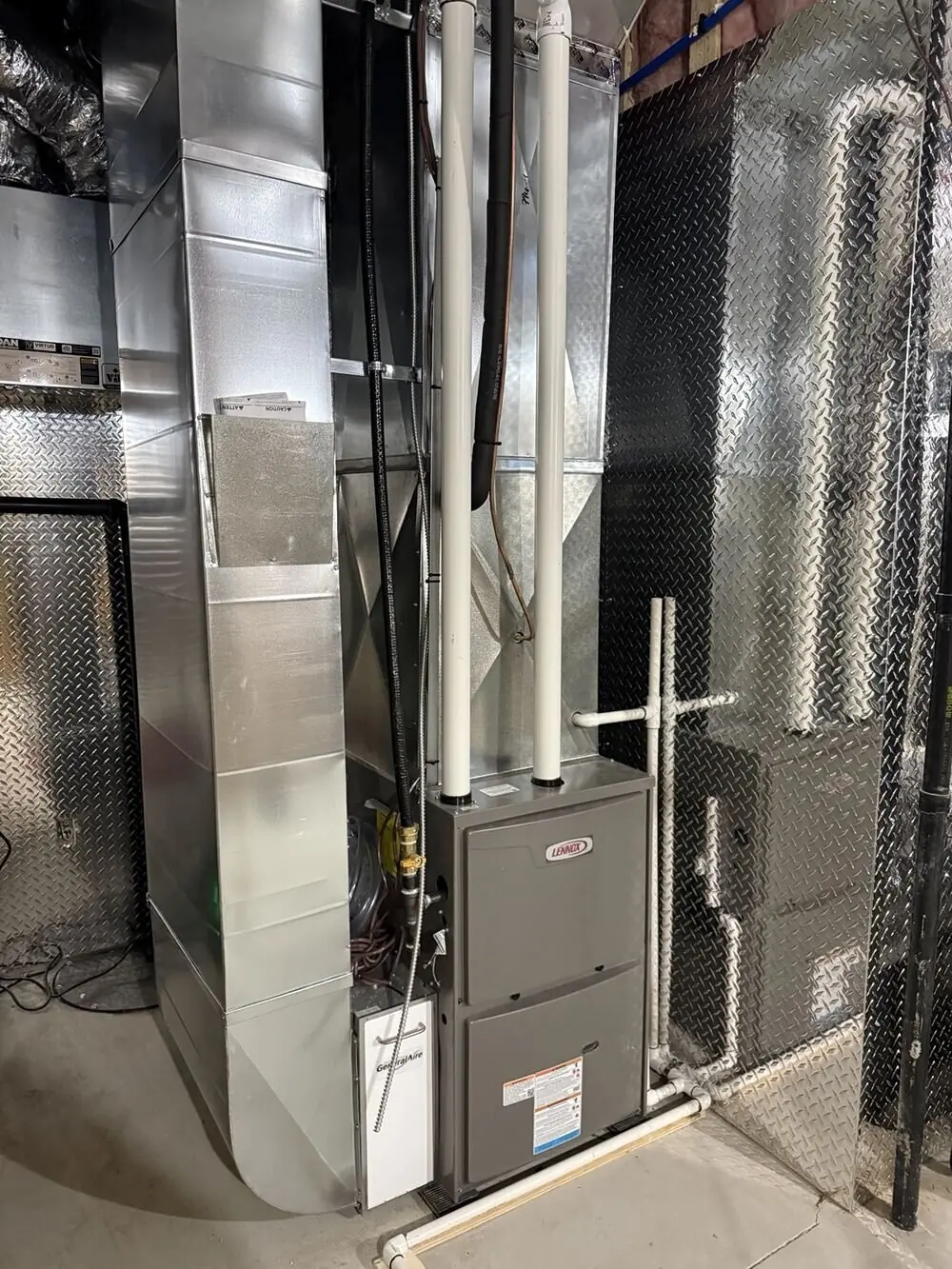
A furnace that stops heating does not automatically need replacing. Equally, another repair is not always the best answer for a system that keeps breaking down. The right decision starts with finding the fault, checking safety and comparing the realistic options.
For homeowners in Mississauga, Etobicoke, Oakville and the surrounding GTA, planning before the heating season can make that decision less rushed. This guide explains what to consider before approving a repair or buying a new furnace.
Start with safety, not the age of the furnace
If you smell natural gas, leave the building immediately. Do not use switches, phones or anything that could create a spark inside. From a safe location, call your gas utility’s emergency line or 911. If a carbon-monoxide alarm sounds, get everyone outside and call 911. Do not re-enter until emergency responders say it is safe.
Do not keep resetting a furnace that shuts itself off, bypass a safety switch or attempt repairs to gas controls or venting. An emergency is not a situation for comparing quotes through a website form. See Enbridge Gas’s gas-leak guidance and carbon-monoxide safety information.
When repairing the furnace may make sense
A repair is worth considering when a technician identifies an isolated fault, the rest of the equipment is in serviceable condition and the furnace still meets the home’s heating needs. A thermostat problem or a replaceable component can interrupt heating without meaning the whole system is worn out.
Ask what failed, why it failed and whether the repair addresses the underlying cause. If an airflow problem is contributing to repeated shutdowns, replacing one component without investigating airflow may leave the original issue unresolved.
Check your existing warranty as well. A covered part may change the comparison, but labour, diagnostic charges and related work may have separate terms. Ask for a written scope rather than assuming everything is included.
When replacement deserves a closer look
An older furnace needs significant work
ENERGY STAR identifies a furnace over 15 years old as a reason to consider replacement. That is a planning guideline, not an expiry date: condition, maintenance and the actual repair matter. Read its replacement guidance and ask a qualified technician to assess your unit.
Breakdowns keep returning
Look at the recent repair history, not just today’s invoice. Several unrelated failures, repeated loss of heat or difficulty obtaining parts can make long-term reliability an important part of the decision. Bring past service records so the technician can see the pattern.
A major component or safety concern is confirmed
A serious defect needs a clear explanation and a safe resolution. Ask for the diagnostic findings and whether a manufacturer-supported repair is available. The extent of the work, parts availability and warranty coverage can affect whether repair or replacement is practical. Never continue operating equipment a qualified technician has identified as unsafe.
The home is still uncomfortable
Cold upstairs rooms, uneven temperatures or higher fuel use deserve investigation, but do not prove a new furnace is necessary. Ductwork, controls, insulation and air leakage may contribute. Have the whole heating system assessed so replacement does not reproduce the same comfort problem.
Compare complete options, not just equipment prices
Ask for the repair scope and replacement scope in writing. For a repair, clarify the diagnosed fault, included work and warranty. For replacement, ask about equipment sizing, installation work, venting, drainage, electrical requirements, thermostat compatibility and commissioning. Confirm any exclusions before proceeding.
Do not assume that a bigger furnace is better or that the existing unit was correctly sized. Ask how the installer will determine your home’s heating requirements and check the ductwork. If you are also considering a heat pump, discuss whether a heat-pump or dual-fuel system suits the property.
Lower energy use can be a benefit, but savings depend on the old equipment, replacement choice, weather, fuel prices and household habits. Treat guaranteed bill reductions with caution. A written assessment is more useful than an estimate based only on the age of the furnace.
What to have ready for a furnace appointment
Collect the model and serial number if they are safely accessible, the approximate installation date, previous repair invoices and warranty documents. Note when the problem occurs, which rooms are affected and any displayed fault code without removing panels or touching internal components.
Describe recent changes such as a renovation, thermostat replacement or newly finished basement. These details help frame the assessment. Tell the technician what matters most to you: restoring heat, improving reliability, solving uneven temperatures or planning an upgrade.
Get a diagnosis before making the decision
A repair can be the sensible choice for an otherwise dependable furnace. Replacement may be more practical when substantial repairs, reliability concerns and the condition of the equipment point in the same direction. Neither decision should be made from age alone.
Airmaxx Heating & Airconditioning Inc. provides furnace repair, maintenance and installation across Mississauga and the GTA. Contact our team to discuss the problem and arrange an assessment. For more general homeowner questions, visit our HVAC FAQ.
Understand the problem. Choose the next step.
Tell us what your furnace is doing and where service is needed.
General information only; this guide does not replace an on-site inspection. Sources were checked August 30, 2026. For gas leaks or carbon-monoxide alarms, leave immediately and contact emergency assistance from a safe location.